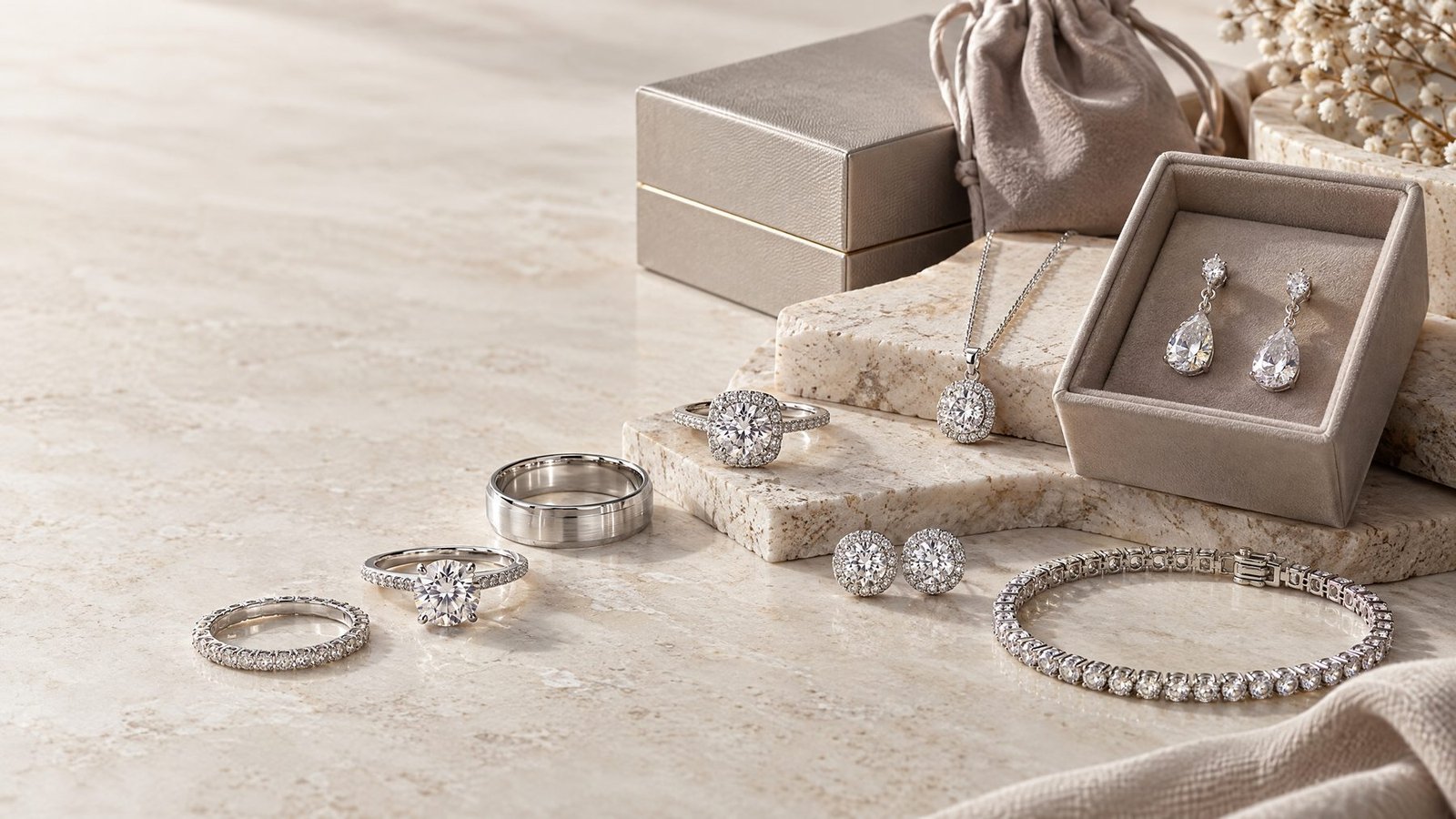
Understanding the Landscape of Jewelry Manufacturing in China
China’s jewelry industry is concentrated in specialized regional clusters, each famous for specific materials and manufacturing techniques. Understanding these locations helps narrow down your search based on your product niche:
- Guangdong Province (Guangzhou, Panyu, Shenzhen, Dongguan): Renowned globally for high-end gold, silver, gemstone setting, fine finished jewelry, and premium brass accessories. Panyu, in particular, is a global center for complex jewelry craftsmanship.
- Zhejiang Province (Yiwu): Famous for high-volume, low-cost fashion and costume jewelry. If your focus is trend-driven, budget-friendly accessories, Yiwu is a primary destination.
- Shandong & Liaoning Provinces: Key regions for synthetic gemstones, silver, and technical components.
When looking for a China jewelry manufacturer, aligning your design requirements with the appropriate manufacturing hub will save significant time and resources.
Step 1: Effective Sourcing Strategies
Finding potential suppliers requires using multiple reliable channels rather than relying on a single search engine query.
B2B Online Marketplaces
Platforms such as Alibaba, Global Sources, and Made-in-China host thousands of listings. To filter through the noise:
- Look for “Verified Suppliers” or those with third-party audit reports.
- Check company profiles to determine whether they are actual factories or trading companies (middlemen).
- Evaluate their operating history—suppliers with more than 5 years of verified activity often demonstrate greater operational stability.
Trade Shows and Industry Exhibitions
Attending major international trade fairs allows you to meet representatives face-to-face and inspect physical product quality:
- Hong Kong International Jewellery Show: Held multiple times a year, bringing together top-tier mainland manufacturers.
- Jewellery & Gem WORLD Hong Kong: One of the world’s largest industry events.
- Canton Fair (Guangzhou): Ideal for discovering large-scale fashion and fine jewelry producers.
Industry Recommendations and Sourcing Agents
Engaging a reputable third-party sourcing agent or seeking referrals from industry peers can accelerate your search. A qualified local agent can conduct factory visits, verify business licenses, and oversee quality control on the ground.
Step 2: Vetting and Qualifying Candidates
Once you have compiled a preliminary list of suppliers, conduct rigorous due diligence before placing a wholesale order.
Factory vs. Trading Company
Working directly with a factory generally ensures lower costs and greater control over custom manufacturing. Trading companies, however, may offer lower minimum order quantities (MOQs) and consolidate products from multiple factories. Decide which model best suits your purchasing volume and operational model.
Key Verification Metrics
Request the following documents and details from any prospective China jewelry manufacturer:
- Business License (营业执照): Verify the registered business scope to ensure manufacturing is explicitly listed.
- Certifications: Look for quality standards such as ISO 9001, BSCI (Business Social Compliance Initiative), or Sedex audits for social compliance.
- Material Compliance Test Reports: Ensure the factory complies with international chemical safety standards, such as REACH (Europe) or California Proposition 65 (USA), regarding lead, nickel, and cadmium content.
Step 3: Requesting Samples and Evaluating Quality
Never place a bulk order without evaluating physical samples first. Sampling allows you to test both product quality and communication clarity.
What to Test During the Sample Phase
- Plating and Finish: Test gold plating durability (e.g., PVD coating vs. electroplating thickness measured in microns). Check for evenness and resistance to tarnishing.
- Craftsmanship: Inspect stone settings (prong, bezel, or pavé) to ensure security. Test clasps, hinges, jump rings, and chains for strength and smooth operation.
- Material Authenticity: Send samples to an independent laboratory to verify metals (e.g., Sterling Silver 925, 14K/18K Gold, Stainless Steel) and stone authenticity.
Pay attention to sample turnaround times. A responsive factory should provide realistic timelines for development and delivery.
Step 4: Assessing Communication, Capacity, and Terms
A successful partnership relies heavily on smooth operational logistics and clear communication.
Clear Communication Standards
Fluency in English, responsiveness to technical specifications (CAD drawings, tech packs), and prompt answers to emails are critical indicators of professionalism. Miscommunications in technical specs can lead to costly batch defects.
Minimum Order Quantities (MOQs) and Scalability
Clarify MOQs early. High-volume factories may require 300 to 500 pieces per style, while smaller specialized workshops might accommodate orders of 30 to 50 pieces. Choose a China jewelry manufacturer whose capacity matches your current order volume while offering the room to scale as your brand grows.
Protecting Intellectual Property (IP)
If you are developing custom or proprietary designs, safeguard your creative assets:
- Request a Non-Disclosure, Non-Use, Non-Circumvention Agreement (NNN agreement) drafted under Chinese law before sharing tech packs or CAD models. Standard Western NDAs are rarely enforceable in Chinese courts.
Step 5: Establishing Payment and Quality Assurance Protocols
Protect your investment by instituting structured payment terms and systematic quality inspections.
Standard Payment Terms
The industry standard for wholesale custom orders is typically a 30% deposit prior to production and the remaining 70% balance paid upon completion and successful quality inspection before shipment. Avoid suppliers demanding 100% upfront payment for custom production runs.
Pre-Shipment Inspections (PSI)
Hire a third-party quality control agency (such as QIMA, SGS, or V-Trust) to conduct on-site pre-shipment inspections. Inspectors check:
- Quantity and packaging accuracy
- Dimensional and weight measurements
- Visual flaws, scratches, or uneven plating
- Tarnish resistance and functional testing
Issues identified during pre-shipment inspection can be corrected by the manufacturer prior to balance payment and shipping.
Building a Long-Term Business Relationship
Finding a dependable China jewelry manufacturer is not merely a transactional process; it is an investment in a strategic partnership. Fair pricing, clear expectations, prompt payments, and constructive feedback foster mutual trust. As your production volumes increase, a reliable manufacturing partner becomes an invaluable asset in scaling your jewelry brand successfully.